
 |
|
Papad and waditan in amritsar and location
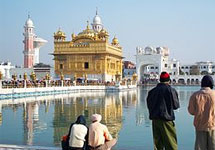
Outside the Temple are many shops and dhabas catering to
pilgrims and the casual tourist. I was told the best place
to buy the famed spicy Amritsari wadis and papads was right
there. I picked on one that claimed to be dealing in these
commodities for over a 100 years. Seemed like they would
know what a good wadi should be.Wadis are available with
varying degrees of spicy-ness. I naturally, asked for the
spiciest ones. Then I had to pick between ‘with or without
plums’. Hmm…with plums sounded nice, but plain ones are
classic. So I got both. When I was paying for them there was
some confusion regarding which were which – after discussing
at length I managed to confuse the shopkeeper as well . To
tell you the truth, I couldn’t tell even after cooking,
unless by some strange coincidence, I ended up keeping all
of one kind for myself and distributing the other between
family and friends. Family and friends, those of you with
better sense of taste, please stand up and let us know if
you detected any note of tart plums in yours. |
| |
|
Papad-Wadiyan
When choosing papads I had a choice between mild, medium,
and hot. No prizes for guessing which ones I bought. The
traditional Punjabi papad is much thicker than the Punjabi
masala sold by Lijjat. Thick papads are best served fried –
the hot oil aids thorough cooking. The thinner one can be
cooked on a open flame, over coals, in the toaster, or even
the microwave oven.
Wadi-making is a household industry all over Punjab and
every maker has her own take on the spices to use. The main
ingredient of Punjabi wadis is some kind of lentil, soaked
and ground, combined with spices. The Amritsari wadis are
made with urad dal and spices such as whole peppercorns, and
crushed red chillies. A handful of the spicy batter is
impressed with the thumb to create a small hollow and put to
dry in the sun. When dry they may be stored in airtight
containers for months. Wadis made with moong dal are called
mangodies and are less spicy.
I remember wadis at times such as now when the heat is
trying to sap our energies and kill our appetites. A tiny
bit of wadi, fried in a little oil before adding the
aromatics, make the taste buds sit up and take notice, and
gets the juices flowing. If you have never used these
before, you’ll be amazed at how aromatic a tiny piece of
wadi can be. The flavour is concentrated and intense and I
find one piece quite sufficient to use in a dish for six
people. Of course, the wadi may vary in size. Punjabis, like
the Kashmiris, mostly tend to think bigger is better – so
traditional wadis are large – half of a tennis ball in size.
The wadi finds its way into many vegetarian preparations in
the traditional cuisine of Punjab. But wadi-aloo is a
classic, and the only way I know ! |
| |
|
Some other Punjabi ways with the wadi
::
wadi with radish (mooli-wadi subzi)
wadi with eggplant
Here is my take on the Punjabi classic:
Wadi Aloo
(Potatoes with spicy lentil-chunks)
4 medium floury potatoes (such as Agra potatoes), peeled and
cubed (3/4″ cubes)
1 Amritsari wadi, crushed into uneven bits not larger than
1/2″
One bunch spring onions, chopped
2 tomatoes, chopped
1 t (heaped) coriander powder
1/2 t turmeric
1/2 t red chilli powder (omit if you like it mild)
1 t cumin seeds
pinch of heeng
salt
1 T oil
1/2 C chopped coriander leaves and stems
Prepare all the vegetables. Heat oil to nearly smoking in a
pressure cooker. Add the cumin seeds followed by the heeng.
Stir and add the wadi pieces. Fry till browned - maybe a
minute or less. Add the onions (white parts first) and fry
till they become translucent. Add the potatoes and stir
around for a minute. Add the remaining spices and stir till
fried; a couple of minutes. Add the onion (green parts),
tomatoes, salt, and half of the coriander leaves. Stir again
for another minute, add a cup and a half of water and cook
under pressure for 7 minutes. Let the pressure subside. Add
the remaining coriander leaves and serve with roti or rice.
A bowl of yoghurt or raita is a good accompaniment. |
| |
|
Chhole
The Punjabi beans like Kabooli Chana and Rajma entered my
mom's kitchen when Kapoor aunty became my Moushi's neighbor.
My moushi (maternal aunt) who used to live in the same
neighborhood as ours, imported all those authentic Punjabi
recipes to our home. |
| |
|
Punjabi Chhole (Chickpeas)
Chhole bhature is an absolutely decadent treat that is a
must-try if you visit Delhi. It is one of Delhi’s many
Punjabi specialties. It is also something I cook less often.
Only because of a personal preference for rajma (red kidney
beans). I have been working on that for the last six months
though. |
| |
|
Permanent link to Pindi Chole/Chana
Pindi Chole/Chana (Ek) December 4, 2007 at 6:24 pm (India,
Pakistan, Punjabi, Rawalpindi, channa/ gram, dishes by
cuisine, dishes by main ingredient, legumes/pulses- whole or
split) Yes, I know I ought to be blogging about pecan pie,
mashed potatoes, Lithuanian mushrooms and beets, Hungarian
|
| |
|
Garam Masala
Up until a few years ago if I came across a recipe with
garam masala as an ingredient, I'd just open a packet at
random and toss in a teaspoon. Then I'd wonder why the dish
never tasted authentic enough. Enlightenment finally dawned
with the help of Madhur Jaffrey. |
| |
|
Paneer Pyaaz Paratha
Onion Cheese Parathas ~ Stuffed Indian flat bread Ask
anyone? Parathas are all time favorite for Indians and that
too if you have it at Dhaba or at your Punjabi friend's
place. My recent indulgence with parathas is quiet a story.
I love trying different types of stuffed parathas, and
amongst them aloo, gobi and mooli are my top favorites.
|
|
|
|
|
 |